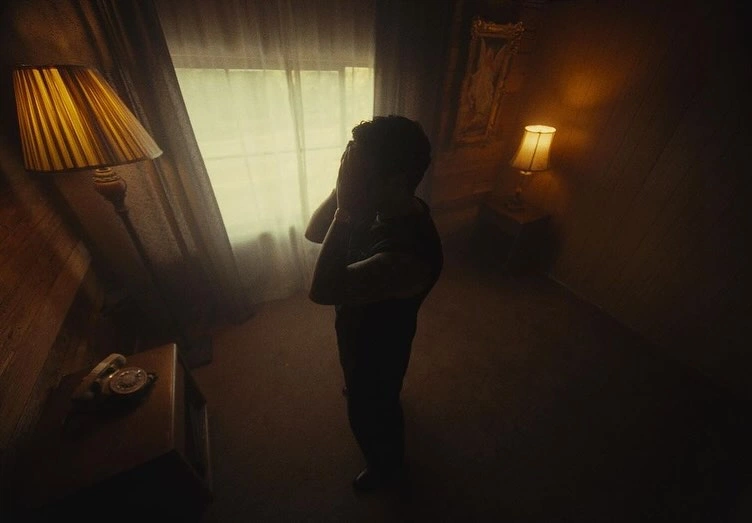
You got home twenty minutes later than you said you would. Nothing happened. You stopped for gas, a coworker caught you on the way out, you sat in the car for a minute because the day was long. And now you are standing in the kitchen accounting for your evening in a level of detail that would hold up in court, and it is still not enough.
If your partner gets jealous about things you have not done, the exhausting part isn't the argument. It's that there is no version of the truth that ends it.
The accusation is rarely a question about you
A study published in July 2026 in Evolution and Human Behavior (Faith Swanson and colleagues, 512 people in committed relationships) found something worth sitting with. The partner who quietly believes they are the more replaceable one is the partner who reports more jealousy, more conflict, and more comparing themselves to imagined rivals. Not the person with the less trustworthy partner. The person with the shakier sense of their own footing.
That matches how jealousy actually sounds up close. Who were you with is the sentence that comes out. Am I still someone you would choose is the question sitting underneath it. Those are not the same question, and answering the first one, again and again, never touches the second.
Which is why your alibi doesn't land. You hand over your evening, timestamped and verified. They accept it. Four days later it starts again about something else entirely. You didn't fail to make your case. You made the wrong case, very well.
The courtroom you've both been living in
Somewhere along the way the relationship turned into a proceeding. They bring an accusation, you bring evidence, and one of you wins that round. The problem is that a person can lose every round and still not feel safe, because reassurance delivered as a defense doesn't read as love. It reads as a defendant being careful.
In conversations people bring to Maia, the accused partner almost always shows up holding proof. Screenshots. A timeline. A phone they have offered three times. And the thing they say next is some version of: I've done everything, and it changes nothing for more than a week. What we hear far less often is any account of what the jealous partner is actually afraid of, because nobody has asked that out loud in months. The couple has gotten extremely good at litigating the incident and has stopped talking about the fear entirely. Both people are lonely, and both are convinced the other one started it.
The other pattern that comes up: the accused partner has quietly shrunk their life. They stopped mentioning the friend who causes trouble. They text ahead of schedule. They no longer bring up the coworker at all, not because anything happened, but because it isn't worth the night it costs. That is when this stops being about jealousy and starts being about walking on eggshells, and it is worth naming before it becomes the shape of your whole relationship.
Insecurity and control are not the same thing
This distinction matters more than any technique, so be honest with yourself about which one you're in.
- Insecurity looks like a partner who spirals, says painful things, and then comes back embarrassed. They can hear that they hurt you. They can name the fear when it passes. They want to stop feeling this way, and the fear runs on the movie that keeps playing in their head, not on anything you did.
- Control looks like rules. Your location shared permanently. Friendships you had to give up. Your phone treated as joint property while theirs is not. Anger that arrives on schedule when you spend time with anyone else. Apologies that arrive only when you've gone quiet enough to scare them, and never change the rule.
Insecurity is painful and workable. Control is a different problem, and no amount of patience on your side fixes it, because your compliance is the point.
What actually lowers the temperature
Assuming you're in the first category, a few things genuinely help.
- Answer the real question once, warmly, without the file folder. Not I was at the gym, here's the check-in. Try You're not competing with anyone. I'm not going anywhere. It feels too simple to work. It's the only sentence that addresses what they asked.
- Stop defending in the moment, and come back to it later. Mid-accusation, nobody is listening. An hour later, ask what the fear actually is when it hits. Then let them answer badly. The first attempt is usually a mess.
- Volunteer information instead of surrendering it. There is an enormous difference between handing over your phone when demanded and mentioning your day before you're asked. One is submission, and it builds nothing. The other is transparency, and it slowly does. This is also where the line between privacy and secrecy gets worked out, and it's a conversation, not a policy.
- Say the cost out loud, once, calmly. Not as a threat. As information: I've stopped telling you about my day because I'm braced for what comes after. I don't want us to live like that. Jealous partners often have no idea their fear is producing exactly the distance they're afraid of.
- Ask them to own the spiral, not to never feel it. The realistic goal is not a partner who never gets a jealous thought. It's a partner who says I'm spiraling, this is mine, can you sit with me for a minute instead of demanding you account for your afternoon.
What makes it worse, even with good intentions
Over-explaining. Every extra detail you volunteer under pressure teaches them that details are the currency, so they ask for more of them. Sarcasm about their insecurity, which lands as contempt and confirms they're a burden. Withdrawing to keep the peace, which feels like the mature choice and reads exactly like guilt. And accepting a rule you resent, then complying badly, which produces a fight about the rule instead of a conversation about the fear.
If you've done all this and nothing shifts
At some point the honest question changes. It stops being how do I reassure them and becomes are they doing any work on this at all.
A partner who wants to get better at this will, eventually, do something you didn't ask for. Catch themselves mid-accusation. Bring it up when they're calm. Talk to a therapist. Tell you they know it isn't fair. If years have gone by and none of that has happened, and your world has kept getting smaller, then you're not dealing with a communication problem. You're dealing with someone who has found a way to feel safe that requires you to be smaller, and that isn't a technique problem on your end. Worth saying plainly: leaving is sometimes the healthy answer here, and so is staying and insisting on real change. But you cannot be the only one holding the relationship's anxiety.
None of this is the same job as rebuilding trust after something actually happened. That's a different repair with different steps. This one is harder in an odd way, because there is no event to fix, just a feeling that keeps arriving and a partner who keeps handing it back to you.
If you're in the middle of this and out of ideas, it can help to talk it through with someone who has the details: what they actually accuse you of, what you've already tried, how you feel when it starts. Maia can help you work out what your partner is really asking, and how to answer that instead of the accusation, in your own words and for your own situation.
Like It? Share this article:
Our Mission & Editorial Standards
At Maia, we're passionate about helping couples thrive. That's why we prioritize providing you with accurate, actionable, and science-backed content.
Our blog posts are grounded in the latest research on relationships, communication, and psychology. We work closely with a team of relationship experts to ensure our content reflects the most up-to-date knowledge in the field.
Our goal is to empower you with the knowledge and skills you need to create a fulfilling and lasting relationship.
Stay tuned for insightful articles, expert advice, and practical tips – all designed to help your love story flourish.